
What are alerts for?
You cannot watch a chart all day. An alert asks Algo Signals to watch, in your place, one market and timeframe with your strategy (indicators, number of agreements, TP/SL method, direction, confirmation), then to notify you on your phone as soon as a new signal appears.
How an alert works
From the Algo Signals page, the “Alert me on this market” button creates the alert with the settings currently displayed: market, timeframe, indicators, “k of N”, TP/SL method and its settings, signal direction, confirmation by a higher timeframe. There is only one alert per market and timeframe: creating a new one for the same pair replaces the previous one. Access is reserved for VIP members.
A program runs every minute on the server. For each alert, it fetches the candles, removes the candle still forming and computes the signals on closed candles. It notifies the latest signal only if it sits on the last closed candle and has not already been sent. If confirmation by a higher timeframe is on and contradicts the signal, it is dropped without notification. Notifications arrive through the mobile app: install it and sign in at least once.
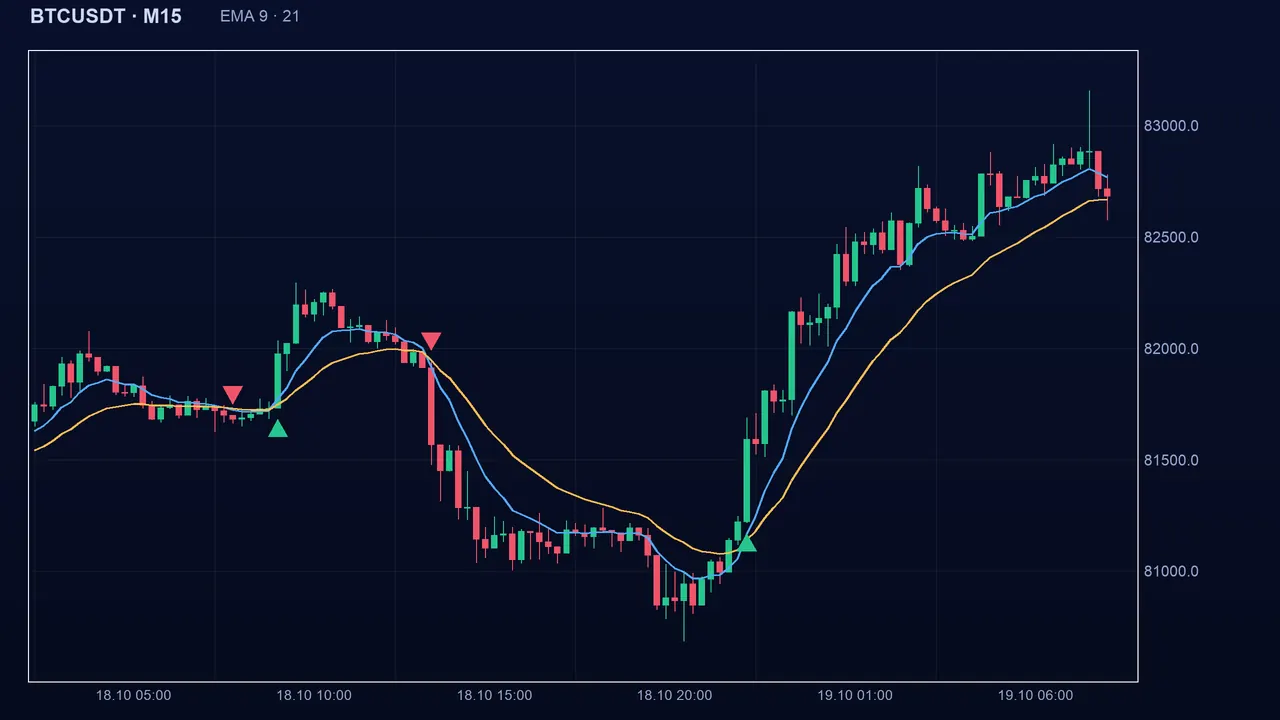
Reading a notification
Each notified signal is also recorded in the site’s tracking. Cautious rule: if the stop and TP1 are touched in the same candle, the stop is counted; the 0.08% round-trip fees are deducted; after 300 candles without a result, the signal is marked expired. In the example: TP1 hit = about +0.76R net (1 − 0.24 of fees); stop hit = about −1.24R.
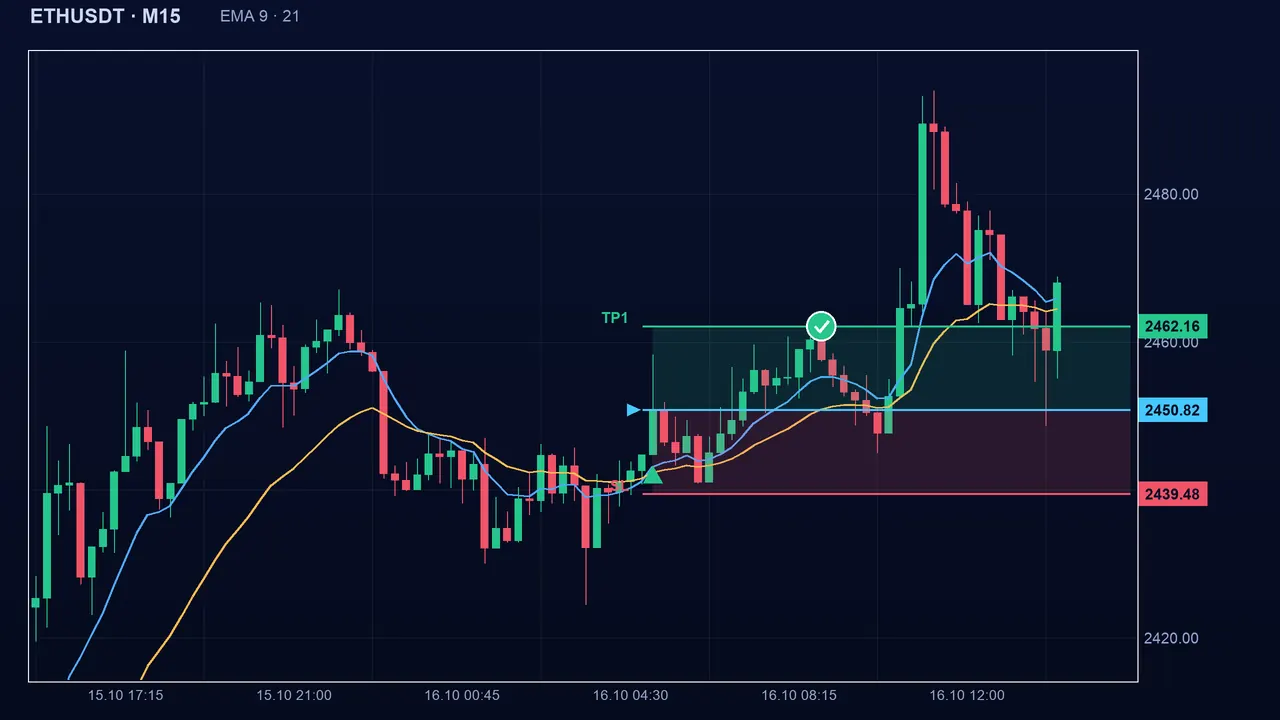
The settings
- Market and timeframe: one alert per pair.
- Indicators, “All” or “k of N”, filters: identical to those of the chart.
- TP/SL method, its settings and the shield: the notification’s levels follow these choices.
- Signal direction (buys, sells, both) and confirmation by a higher timeframe.
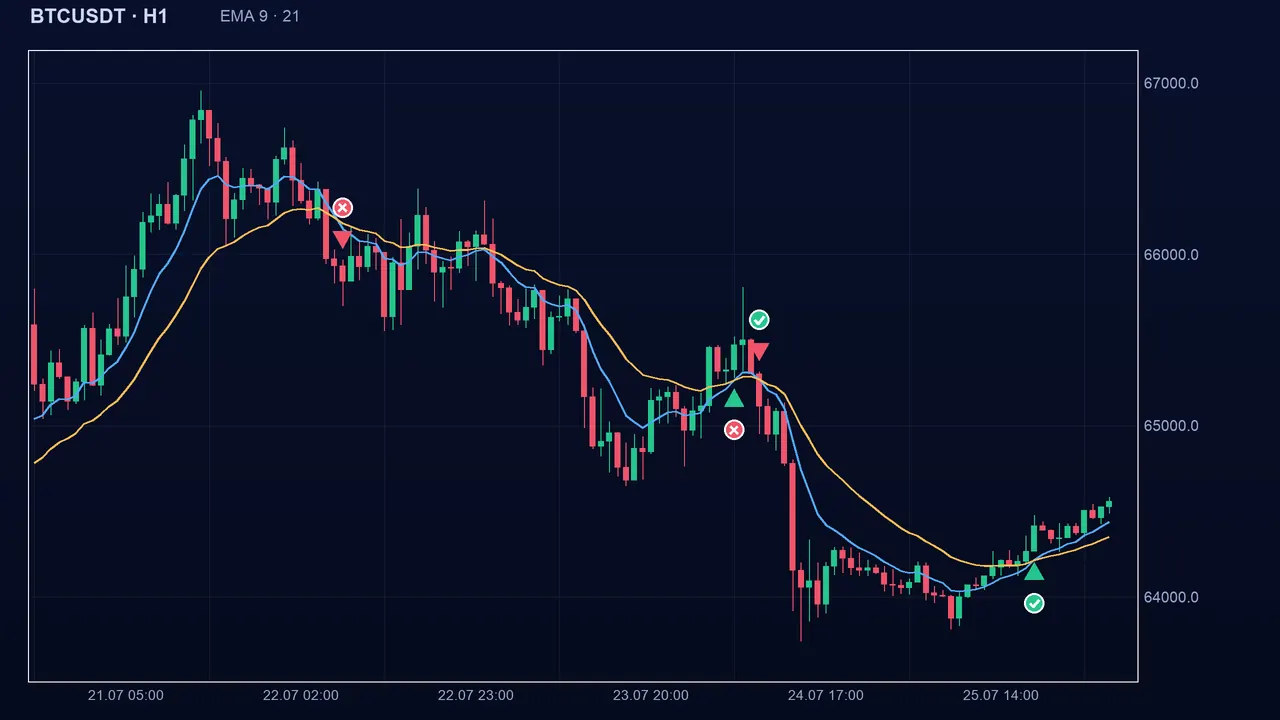
The pitfalls
Key takeaways
- An alert = one market + one timeframe + your strategy; only one per pair.
- A program scans every minute and notifies a signal born on the last closed candle.
- The notification gives the entry, SL, TP1 and TP2: recompute your ratio at your real price.
- Notified signals are tracked with a cautious rule and 0.08% of fees.
📝 Lesson test
Log in to take this lesson’s test. Once you have passed all the tests, you will receive a certificate in your name.
Log inThese lessons are for understanding and are not investment advice. No method guarantees winning.