
Why combine several indicators?
A single indicator is often wrong. The idea of confluence is to require that several tools say the same thing before showing a signal. This reduces the number of signals but does not make them winning signals: no combination has a proven edge.
How the engine counts agreement
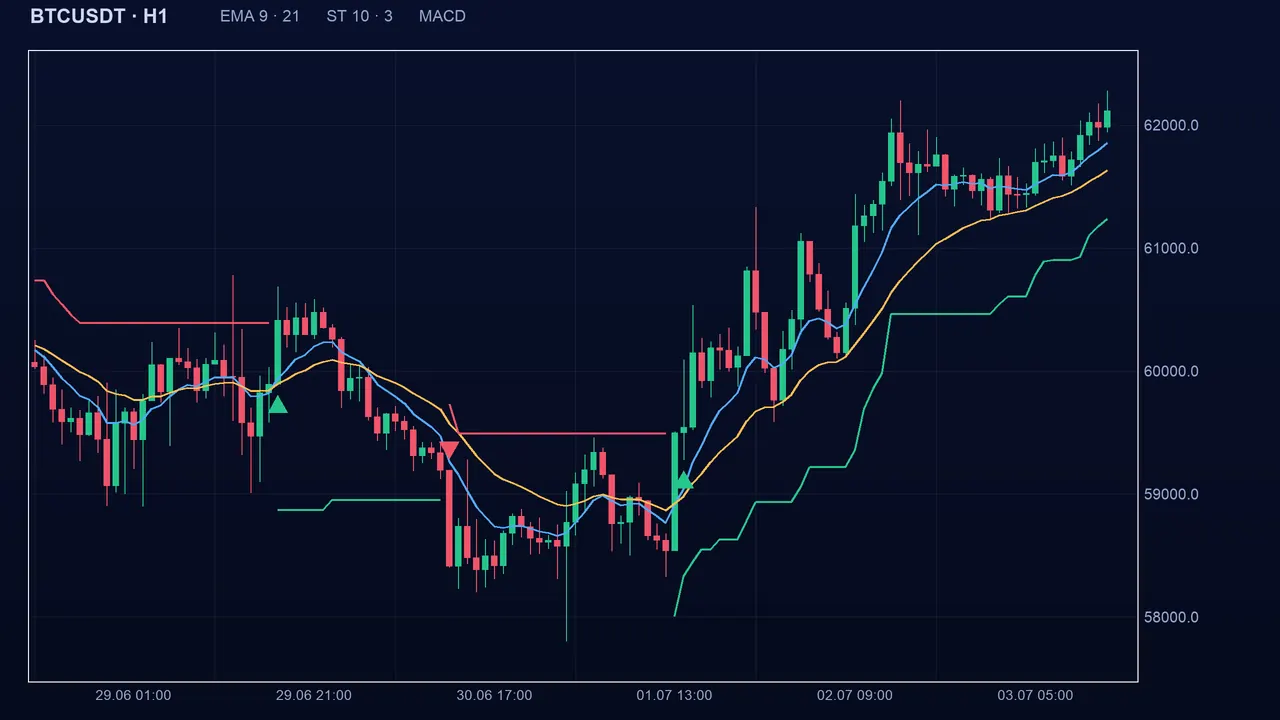
In Algo Signals, each checked indicator votes at every candle: bullish (+1), bearish (−1) or neutral (0). The “Filter: indicators that must agree” setting offers “All (N)” or “k of N”. A buy is kept if at least k indicators are bullish AND they outnumber the bearish ones (a tie gives nothing). For a sell, it is symmetrical. The fewer agreements you require, the more signals you get, but the more fragile they are. The more you require, the rarer and often later the signals: the last indicator to flip triggers the entry, after part of the move.
A signal only appears at the moment when at least one indicator has just flipped to the chosen direction. As long as the direction does not change, the engine does not emit a new signal. The “filter” indicators (Swing highs/lows, Structure, Liquidity, Support/resistance, Fibonacci, Heikin-Ashi), when checked with other indicators, do not count in N: they filter, meaning their direction must match the signal’s.
Reading a signal with confluence
Confirming with a higher timeframe
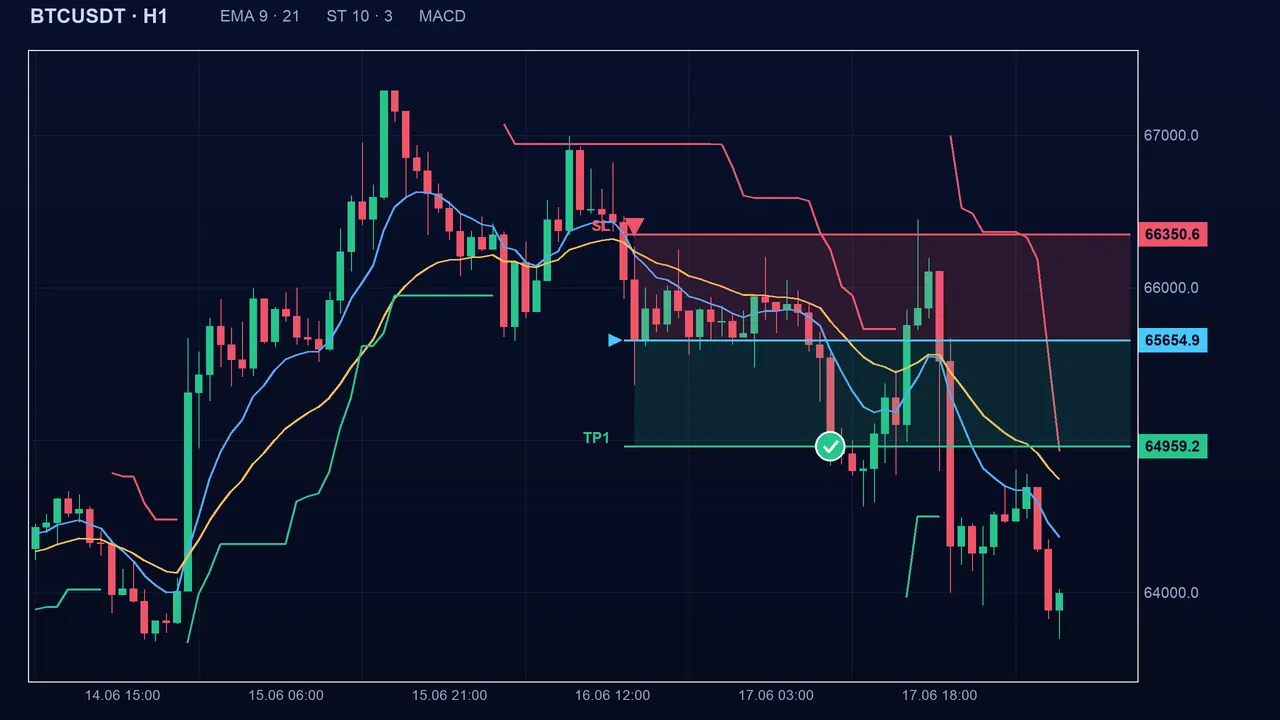
The “Confirm with a higher timeframe” option chooses an indicator (Supertrend by default) and a larger timeframe (for example H1 for an M15 chart). A signal is kept only if that indicator, read on the last higher-timeframe candle already closed at the time of the signal, points the same way; if its state is unknown, the signal passes. Phone alerts use the same filter.
- “All (N)” or “k of N”: how many indicators must agree (ties give nothing).
- “Filter” indicators: they do not count in N but block opposite signals (the menu shows “+ n filter(s) active”).
- Higher timeframe: confirmation indicator and timeframe, larger than the chart’s.
- “Signal direction”: buys only, sells only, or both.
The pitfalls
Key takeaways
- “k of N”: at least k in agreement AND a clear majority; a tie gives nothing.
- A signal is born when an indicator flips; no duplicate while the direction is the same.
- Filter indicators do not count in N: they block opposite signals.
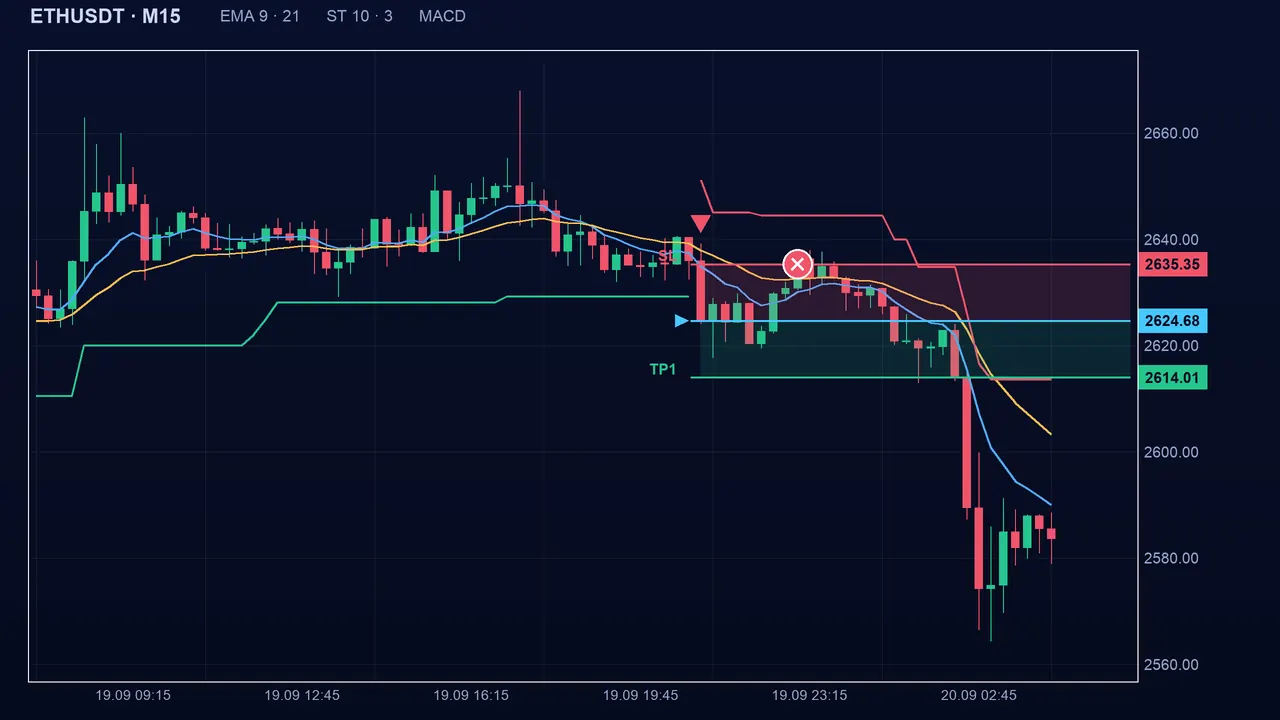
- Higher-timeframe confirmation reduces signals against the bigger trend, at the cost of rarer signals.
📝 Lesson test
Log in to take this lesson’s test. Once you have passed all the tests, you will receive a certificate in your name.
Log inThese lessons are for understanding and are not investment advice. No method guarantees winning.