
What is the “MA stop” method for?
In an uptrend, price generally stays above a moving average. If price falls clearly below that average, the “trend” idea is seriously in doubt. The “MA stop” method (mastop) uses this logic: a buy’s stop goes below the average, a sell’s above. The targets are multiples of the risk.
How the levels are calculated
The engine computes an exponential moving average (EMA) of closes over period candles (50 by default). Buy: SL = EMA − cdBuf × ATR (a margin of 0.5 ATR). Sell: SL = EMA + cdBuf × ATR. The risk is the distance between entry and stop; TP1 = entry + risk × rr1 (1) and TP2 = entry + risk × rr2 (2). The ATR is the average size of a candle over 14 candles.
If the resulting stop is closer than 0.1 ATR to the entry or on the wrong side (the average is above price for a buy), the method falls back to the default ATR: stop at 1.5 ATR, targets at 1 and 2 times the risk. The TP/SL safeguards then apply to this method.
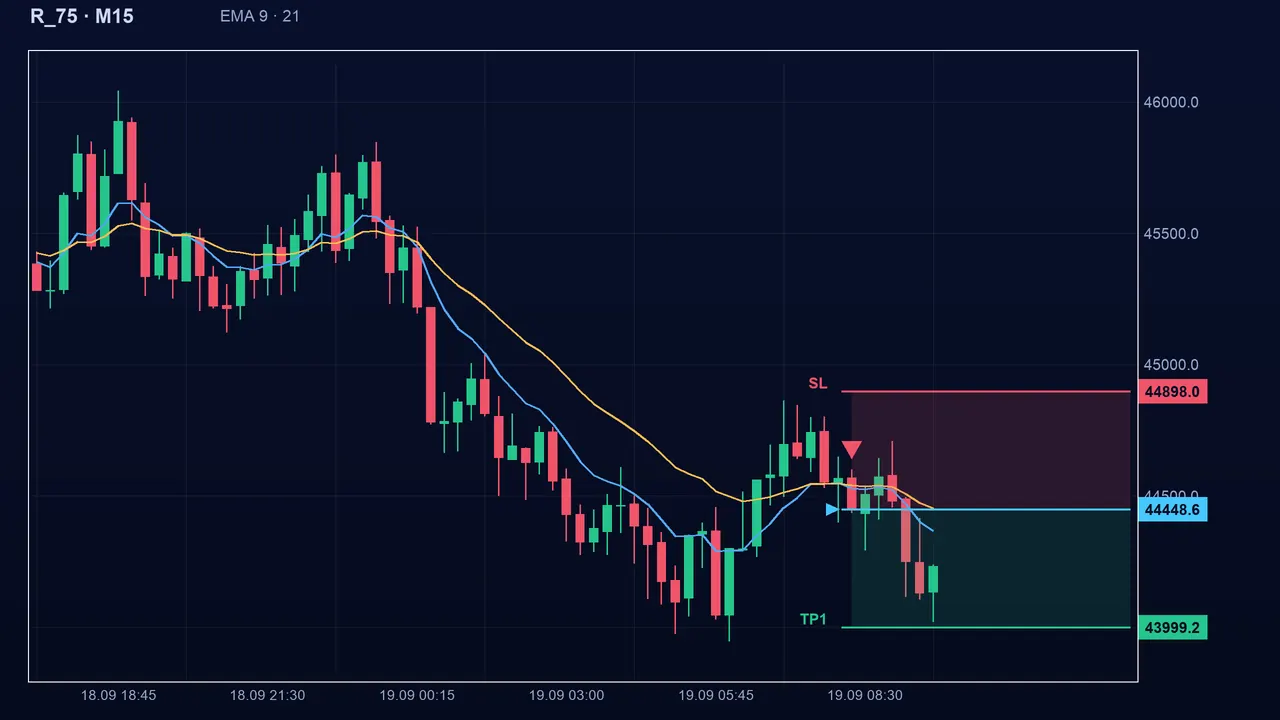
Reading a signal with this method
If price falls back to 2,652.80, it is −1R (with $10 of risk, the size is 10 ÷ 11.70 = 0.85 units). If it rises to 2,676.20, it is +1R, then 2R at TP2. The closer price is to its average, the closer the stop; the farther it has moved away, the farther the stop.
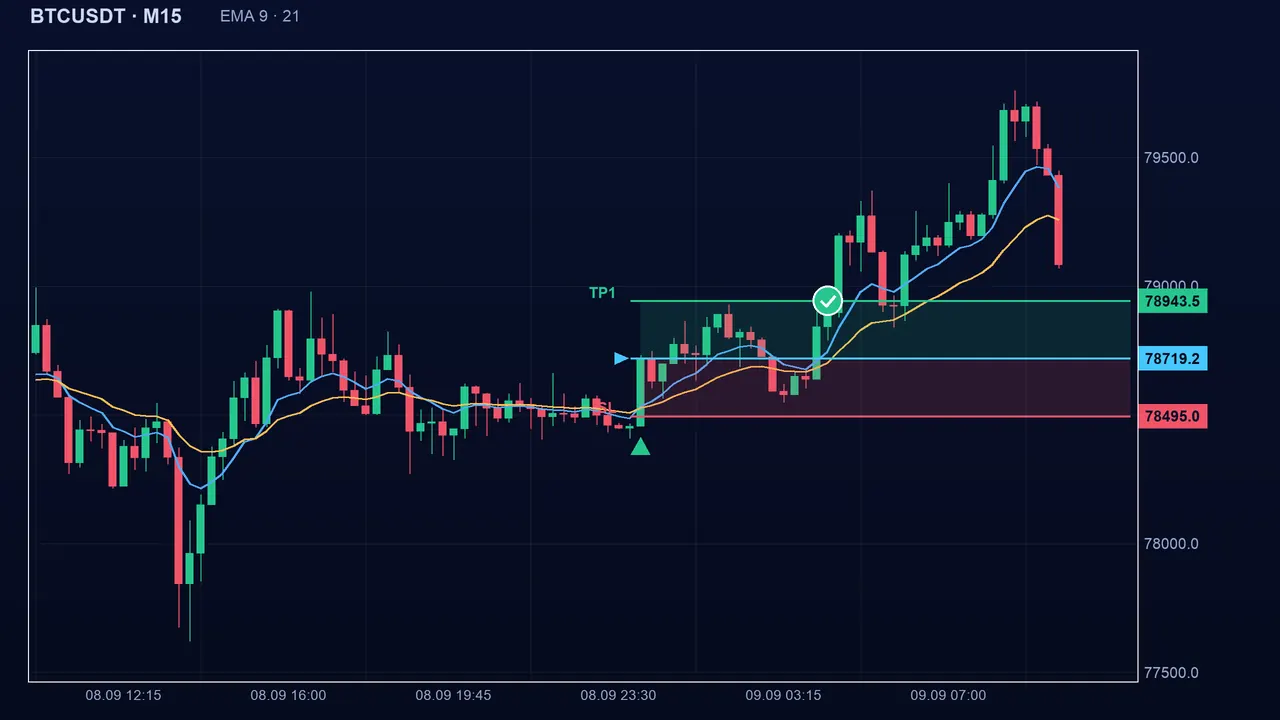
The settings
- period (default 50, from 2 to 500): EMA length. Smaller, the average hugs price and the stop is closer. Larger, it is slow and the stop farther.
- cdBuf (default 0.5, from 0 to 5): margin beyond the average, in ATR. At 0, the stop is exactly on the average.
- rr1 (default 1) and rr2 (default 2): targets as multiples of the risk.
- Safeguards (shield): maximum stop in ATR (0 = unlimited), minimum TP1 and TP2, correction mode.
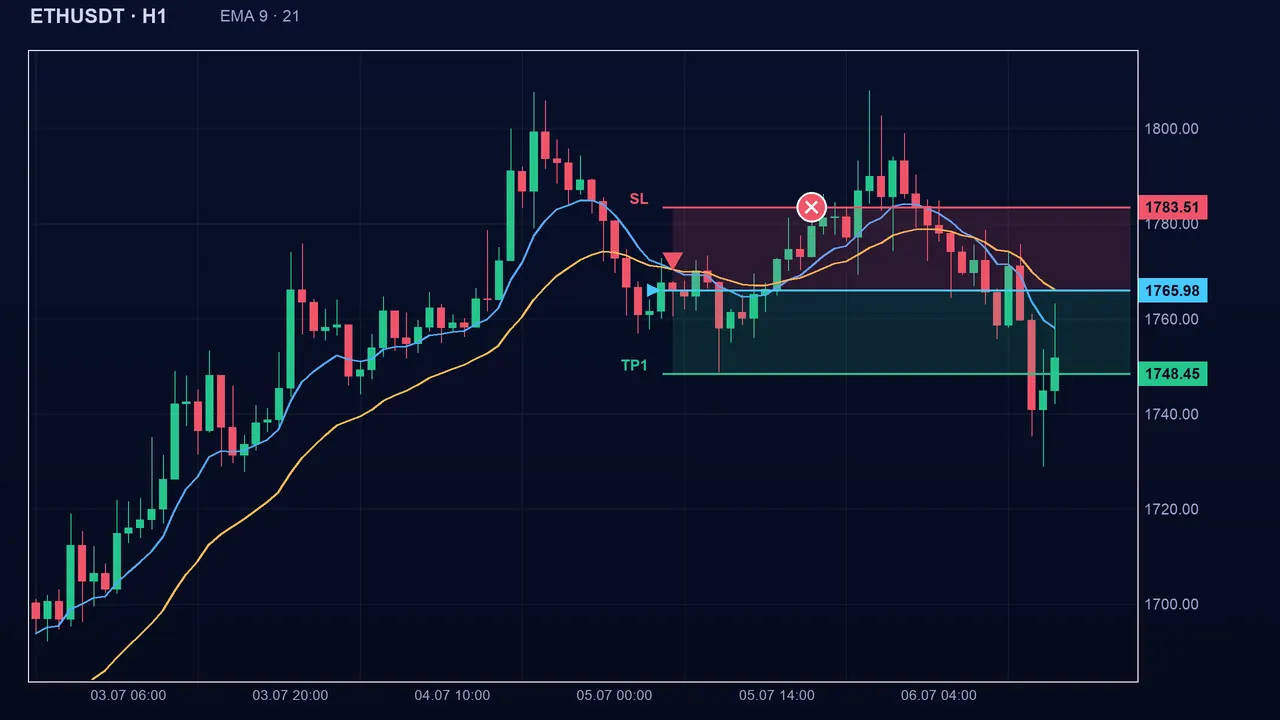
The pitfalls
Key takeaways
- MA stop = stop on the other side of an EMA (50) minus a 0.5 ATR margin.
- The farther price moves from its average, the wider the stop: limit it with the “maximum stop” safeguard.
- Fallback to the ATR if the average is on the wrong side or glued to the entry.
- Targets as multiples of the risk (1 and 2).
📝 Lesson test
Log in to take this lesson’s test. Once you have passed all the tests, you will receive a certificate in your name.
Log inThese lessons are for understanding and are not investment advice. No method guarantees winning.